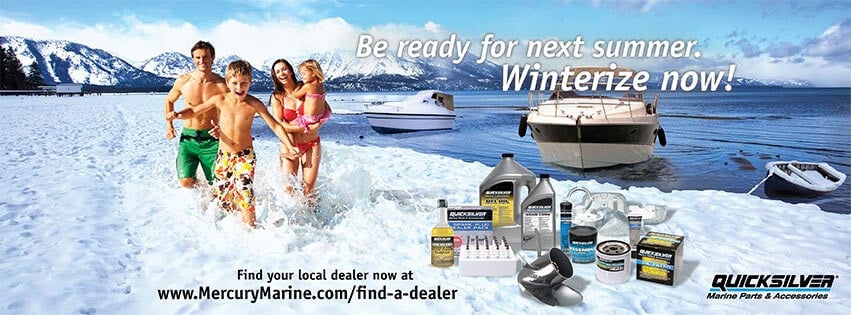
 Winterizing your motor before the first hard freeze is extremely important to prevent expensive damage come spring time. A cracked block as a result of freezing will cost thousands of dollars not to mention missed time out on the lake next spring while you wait for your motor to be repaired. Spend the time and the money to have one of our certified technicians properly winterize your boat before it's too late.
As more and more boats arrive to our shop for winterization, it seems appropriate to review the service options from US Boatworks. We offer three levels of winterization service to meet everyone's needs. Feel free to review your options before you come in with your boat. We are happy to answer all questions you may have regarding our winterizing process & look forward to seeing you soon.
- Don't wait too long to winterize your outboard motor!
The BASIC service includes the following:
- Stabilize fuel
- Fog engine
- Drain and refill block with anti-freeze
- Check engine oil
- Check gear oil
The STANDARD service includes the same as the basic service above plus the engine oil & gear lube is changed:
- Stabilize fuel
- Fog engine
- Drain and refill block with anti-freeze
- Check engine oil
- Check gear oil
- Change engine oil
- Change gear lube
The DELUXE service includes all the items in the above standard service plus we pull the outdrive to inspect for wear, inspect bellows, grease u joints, check alignment and grease the bearing.
- Stabilize fuel
- Fog engine
- Drain and refill block with anti-freeze
- Check engine oil
- Check gear oil
- Change engine oil
- Change gear lube
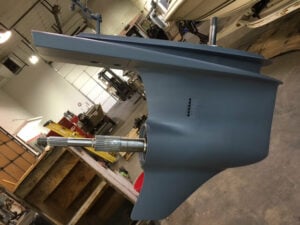
- Pull the outdrive & inspect for wear, inspect bellows, grease u joints, check alignment and grease the bearing.

 While you are enjoying the last few weeks on the lake, keep in mind that the task of winterizing your outboard or sterndrive is around the corner. Winterization will need to be completed before the first hard freeze. So, boaters have a choice of taking their boat in to have it winterized by
 Outboard - 2 Stroke
 Engine Oil



 If the customer is inclined, we will suggest checking for fuel leaks, reviewing all fittings and connectors for leaks and testing the fuel bulb. We also ask if the fuel lines have been replaced and if so, what brand has been installed? When the answer is the fuel lines have been replaced by lines purchased at a large discount store, we suggest purchasing OEM fuel lines and installing them with new fittings. The fuel lines from the discount stores last a fraction of that of an OEM line. The quick deterioration of the generic lines often times cause boaters more problems than the money saved up front. Frequent replacing of lines and time lost on the water is far more costly than simply purchasing the OEM lines to begin with. If fuel lines have never been replaced, they still may need to be changed out with new OEM lines to insure fuel can reach the motor with ease.
 price is slightly cheaper than the OEM boat engine oil so we often get the question: "Can I safely use the aftermarket or generic oil in my outboard motor?"
 out on the water to cool off. Don't miss out on great times at the lake. Consider that new
